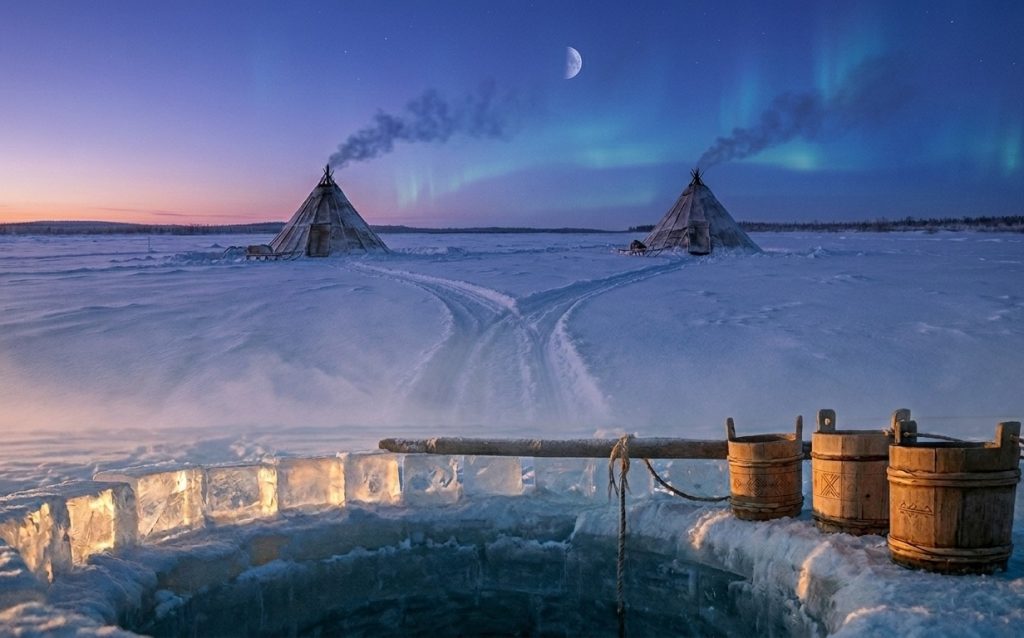
Far from the aridity and the deserts, far from the Sahel and its Islamic societies, the Nunatsiarmiut existed in the heart of the ice and practiced polygamy. While in sub-Saharan regions, polygamy was often structured around religious precepts or the management of agropastoral domains, it found a completely different raison d’être in the Central Arctic. Among the Nunatsiarmiut (“the people of the beautiful land”), the plurality of unions was not a sign of ostentatious wealth, but a pragmatic—almost surgical—response to one of the most hostile environments on the planet. Here, morality did not dictate the law; it was the cold, hunger, and the absolute necessity of cooperation that sculpted the household.
I. The Theater of the Extreme: A Geography of the Absolute
To understand the social structure of the Nunatsiarmiut, one must first grasp the vastness of the Kitikmeot region. Located above the Arctic Circle, this land is a desert of tundra and sea ice where the human being is a biological anomaly, surviving only through technology and social organization1.
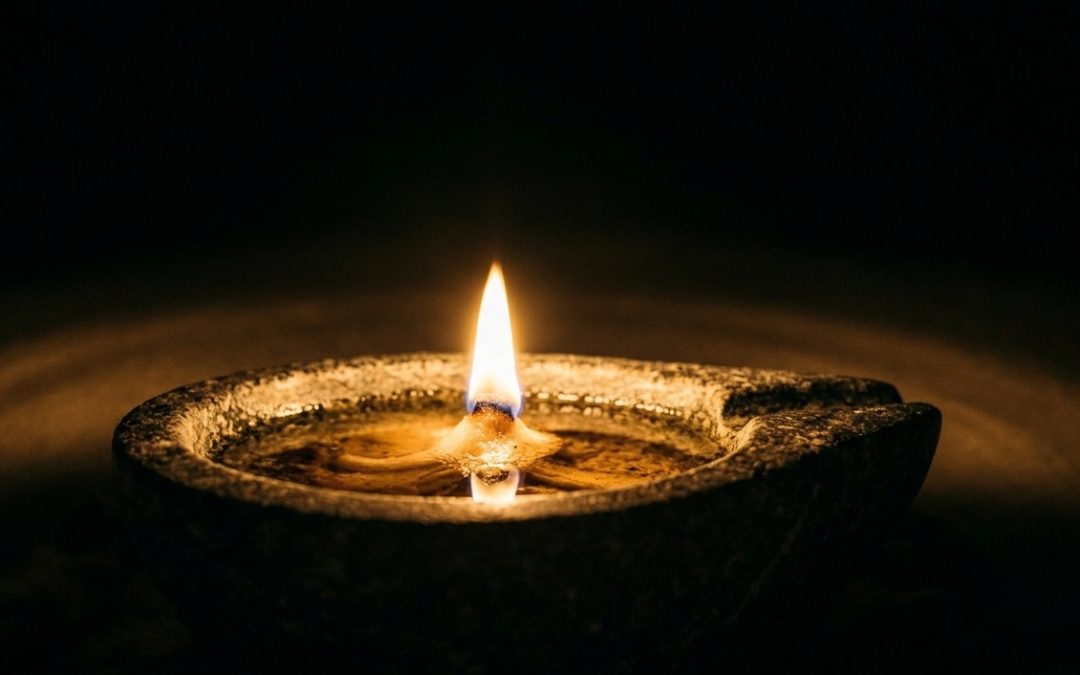
In this universe, the basic cell—the couple—is an indispensable unit of production: the man is the provider of calories (hunting seal, caribou, and bear), while the woman is the engineer of transformation. Without the wife’s labor—tanning hides, managing the oil lamp (qulliq), and above all, mastering waterproof sewing—the greatest hunter would freeze to death within hours. It is within this radical interdependence that polygamy takes root.
Ethno-historical Data
-
People: Nunatsiarmiut (Copper Inuit / “People of the beautiful land”)
-
Geographic Zone: Canadian Central Arctic (Victoria Island and Coronation Gulf region)
-
Climate: Polar (Tundra, sea ice, 9-month winters, temperatures dropping below -40°C)
-
Matrimonial System: Survival Polygyny / Occasional Polyandry (Logic of the Minimum Viable Domestic Unit)
-
Base Economy: Nomadic hunting and gathering (Seals in winter; caribou and Arctic char in summer)
-
Status of Women: Managers of thermal survival (Mastery of the oil lamp and skin clothing production, without which the hunter perishes)
-
Ethnoatlas Code: Na13 (Murdock).
Ethno-historical Data
-
People: Nunatsiarmiut (Copper Inuit / “People of the beautiful land”)
-
Geographic Zone: Canadian Central Arctic (Victoria Island and Coronation Gulf region)
-
Climate: Polar (Tundra, sea ice, 9-month winters, temperatures dropping below -40°C)
-
Matrimonial System: Survival Polygyny / Occasional Polyandry (Logic of the Minimum Viable Domestic Unit)
-
Base Economy: Nomadic hunting and gathering (Seals in winter; caribou and Arctic char in summer)
-
Status of Women: Managers of thermal survival (Mastery of the oil lamp and skin clothing production, without which the hunter perishes)
-
Ethnoatlas Code: Na13 (Murdock).
II. Polygyny: The Efficiency of the “Great Hunter”
Polygyny (one man, several women) addressed three survival imperatives identified by anthropologists2 :
- Surplus Management: An exceptional hunter often brought back more game than a single woman could process. Taking a second wife—often called nuliapaq—effectively doubled the household’s transformation capacity, preventing the waste of vital resources.
- The Social Safety Net (Levirate): Hunting accidents were frequent. Polygamy served as a life insurance system: the brother of the deceased would often integrate the widow into his own household to ensure her survival and that of the children.
- Sorority: It was common for a man to marry two sisters. This configuration minimized domestic tensions and guaranteed fluid cooperation between co-wives sharing a blood bond.
III. The Symbolism of the Qulliq: Hierarchy and Light
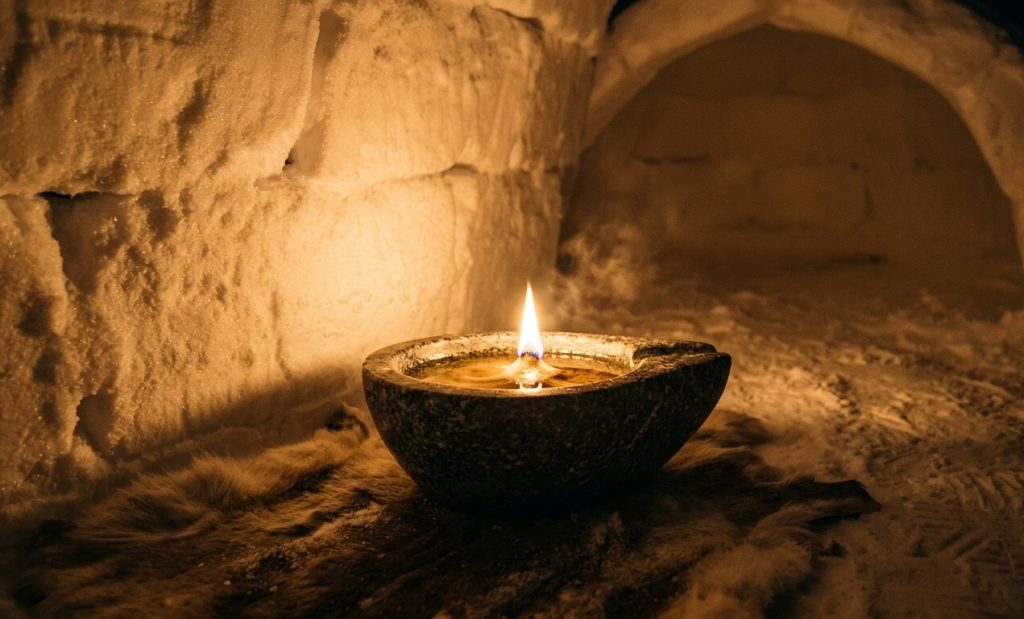
Within these multiple-wife households, social order was not dictated by titles, but by the management of fire. The qulliq, a soapstone lamp fueled by seal blubber, is the central object of Inuit life.
In a polygamous household, the first wife (nuliaq) is the true guardian of the home. It is she who owns and maintains the primary lamp. She decides the intensity of the flame, thereby regulating the temperature and light within the igloo. The second wife may own a smaller lamp or assist in maintaining the main one, but she remains under the supervision of the keeper of the fire. While the hunter provides the raw material, it is the woman, through the qulliq, who transforms fat into life, making her the pivot of the domestic hierarchy.
IV. Polyandry and Nuiliritiit: The Alliance Network
A rare feature that distinguishes Inuit cultures is the existence of polyandry (one woman, several husbands), often to compensate for demographic imbalances3. However, the most fascinating aspect remains the Nuiliritiit (or co-marriage).
This was a ritual extension of marriage where two couples decided to exchange partners. This pact created a formal kinship bond: the husbands became “alliance brothers” with an obligation of absolute mutual aid. Children born from these unions were considered brothers and sisters. This system allowed for the weaving of a solidarity network across thousands of kilometers, transforming strangers into potential allies in a desert where isolation is synonymous with death4.
V. Immersion: A Night in the Nunatsiarmiut Igloo
Imagine the interior of a large communal igloo. The air is thick with the scent of seal blubber burning in the qulliq. On the ice platform covered with thick caribou skins, the arrangement of bodies is strategic.
The man occupies the center, flanked by his two wives. The first wife manages the primary lamp, the symbol of authority. The second assists the first in butchering frozen meat. The children sleep in the middle, benefiting from the accumulated human warmth. Here, jealousy is a luxury no one can afford. Discord would shatter the household’s unity, and in the Arctic, a social fracture is as deadly as a crack in the ice beneath one’s feet. Collective survival imposes a functional harmony where each member of the matrimonial trio knows their role5.
VI. The Twilight of Traditions and the Legacy
Between 1920 and 1950, the arrival of missionaries marked the brutal end of overt polygamy. The churches saw these arrangements as a form of depravity, totally ignoring the economic and security functions of these structures. The dismantling of polygamous households often led to the marginalization of “second wives,” who were suddenly rejected by the new morality.
However, the legacy of the Nunatsiarmiut has not disappeared. It has transformed into what we see today in Nunavut: an extremely fluid culture of customary adoption (tiguaqnit) and a solidarity between households that remains the backbone of modern Arctic society6.
Conclusion: A Lesson in Resilience
The matrimonial history of the Nunatsiarmiut offers an inverted mirror of our own social constructions. It teaches us that the family is not a fixed form, but a plastic structure capable of adapting to the most extreme conditions. While Saharan polygamy is often a matter of prestige or religious continuity, Arctic polygamy was an ethic of survival. It bears witness to a collective intelligence where the individual stepped aside for the sake of the group’s permanence.
Footnotes
- Rasmussen, K. (1931). The Netsilik Eskimos: Social Life and Spiritual Culture. Report of the Fifth Thule Expedition. ↩︎
- Jenness, D. (1922). The Life of the Copper Eskimos. Canadian Arctic Expedition. Precisely document the family structures of Central Arctic groups. ↩︎
- Balikci, A. (1970). The Netsilik Eskimo. Natural History Press. The most nuanced analysis of demographic and matrimonial regulation. ↩︎
- Guemple, L. (1972). Alliance in Eskimo Society. Proceedings of the American Ethnological Society. Technical analysis of partner exchange systems (Nuiliritiit). ↩︎
- D’Anglure, B. S. (2006). Inuit Being and Rebirth. (Original: Être et renaître inuit). Essential for understanding spirituality and the fluidity of the household. ↩︎
- Government of Nunavut. Cultural Heritage Archives. Documents regarding social transition and the impact of religious missions. ↩︎
Frequently Asked Questions (FAQ)
Who are the Nunatsiarmiut and where did they live?
Why did the Nunatsiarmiut practice polygamy?
What is the difference between polygyny and polyandry in the Arctic?
-
Polygyny (one man with several women) was the most common form, aimed at maximizing the transformation of hunting resources.
-
Polyandry (one woman with several husbands) was rarer but accepted. It often occurred during demographic imbalances to allow every man to be attached to a household, thereby guaranteeing the maintenance of his clothing and equipment—both vital for survival.
What is "Nuiliritiit" or partner sharing?
What was the role of the first wife (Nuliaq) in a polygamous household?
Why did polygamy disappear among the Inuit?
What is the current legacy of these social structures?
Social Systems and Realities from Elsewhere
Explore the Diversity of the World’s Foundations
The Monguor (Tu) People: Clan Systems and Matrimonial Dynamics
The Engineering of the Union: The Five Universal Logics of Polygamy
Tuareg (Kel Tamasheq): The Sentinels of Matriliny