
Tuareg (Kel Tamasheq): The Sentinels of Matriliny
In the collective imagination, the Tuareg is the “Blue Man” draped in his cheche, a romantic figure of nomadism. For the social engineer, the reality is more radical: the Kel Tamasheq represent one of the world’s most sophisticated systems of cultural resistance. In the heart of the Sahara, they have erected a structure where Islam—despite its traditionally patrilineal nature—has had to contend with a rock-solid uterine kinship base [1]. Here, polygamy is not a norm of comfort, but a tactical anomaly—a “keystone” used with surgical parsimony to stabilize fragile geopolitical alliances.
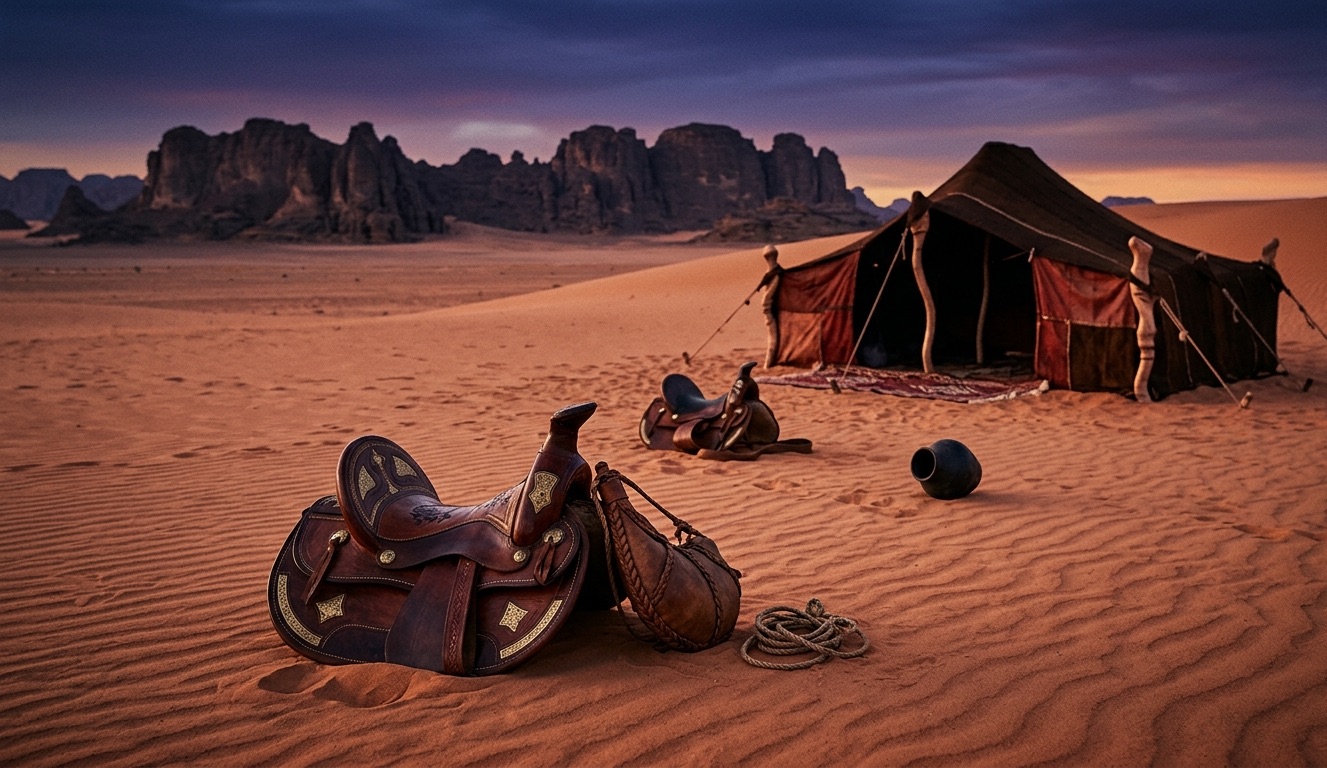
Ethno-Historical Data
- People: Tuareg (Autonym: Kel Tamasheq)
- Geographic Zone: Central Saharan Massifs (Hoggar, Tassili, Aïr, Adrar des Ifoghas)
- Climate: Arid and hyper-arid (Extreme thermal amplitude)
- Matrimonial System: Dominant monogamy / Diplomatic polygyny (Rare/Elite)
- Base Economy: Nomadic pastoralism (Camels, goats), trans-Saharan trade
- Status of Women: Exclusive owner of the unit of sovereignty (Ehen / The Tent)
- Ethnoatlas Code: Cc9 (Murdock).
Ethno-Historical Data
- People: Tuareg (Autonym: Kel Tamasheq)
- Geographic Zone: Central Saharan Massifs (Hoggar, Tassili, Aïr, Adrar des Ifoghas)
- Climate: Arid and hyper-arid (Extreme thermal amplitude)
- Matrimonial System: Dominant monogamy / Diplomatic polygyny (Rare/Elite)
- Base Economy: Nomadic pastoralism (Camels, goats), trans-Saharan trade
- Status of Women: Exclusive owner of the unit of sovereignty (Ehen / The Tent)
- Ethnoatlas Code: Cc9 (Murdock).
I. The Architecture of Power: The Sovereignty of the Tent (Ehen)
The Desert Matri-Archon
-
Resilience Logic: During times of war or raids (razzia), men are mobile, exposed, often absent, or killed. By anchoring property and descent within the female line, Tuareg society ensures a biological and material continuity that the hazards of combat cannot break.
- Man as a Satellite: The man revolves around the tent of his mother, then his wife, then his sisters. He is the armed wing and the diplomat, but the “root” of the clan is uterine
The Transmission of “Blood” (Arat n tasset)
“The womb tints the child,” say the elders.
II. Tactical Polygamy: A Flesh-and-Blood Embassy
The Anomaly of the Nobility
The Logic of Communication “Nodes”
When a confederation chief takes a second wife, he is not seeking to expand his household (since each woman keeps her own tent, often in her own camp). He is creating an alliance node:
- Well Rights: By marrying a woman from a vassal clan (Imghad) or a neighboring tribe, the man gains priority access to his in-laws’ pastures and water points.
- The Peace Hostage: Marriage serves as a non-aggression treaty. One does not raid a camp where the daughter of a powerful ally resides.
- Flow Management: In a caravan-based economy, having wives distributed across different trans-Saharan axes allows the chief to have logistical “relays” and reliable informants over thousands of kilometers [3].
III. Takarakit: The Engineering of Respect and the Veil
One of the most fascinating aspects of Tuareg society is the inversion of the veil. It is the men who wear the Tagelmust (the blue cheche), leaving only a slit for the eyes, while women move about with their faces uncovered.
The Protocol of Erasure The male veil is not a fashion accessory; it is a social regulatory tool. It is intrinsically linked to the concept of Takarakit (modesty, reserve).
-
Conflict Avoidance: In a society where men are armed and honor is an inflammable currency, the veil allows one to mask emotions (anger, fear, desire). It serves as a neutrality interface.
-
Respect for Elders and Allies: The veil is pulled higher in the presence of a father-in-law or a man of superior rank. It is an act of ritual submission that maintains class hierarchy without resorting to brute force.
The Imposition of Patriarchy: Administrations, based on classic European or Arabic models, recognized only the male “head of the family.” By issuing family record books in the father’s name, they legally dispossessed women of their ancestral sovereignty over the tent and the herds
Female Spiritual Autonomy
While the man hides behind his cheche, the Tuareg woman manages the people’s memory. It is the women who largely master Tifinagh, the ancestral script. They organize the Ahal, courts of love and poetry where political and matrimonial intrigues are woven.
-
Analysis: By leaving the mastery of writing and culture to women, Tuareg society ensures that even if the men perish in combat, the cultural software (language, laws, history) survives.
IV. The Clash of Nation-States
The dismantling of the Tuareg “Bedrock” is a textbook case of social engineering destruction through the imposition of an exogenous model.
- The Sledgehammer of the Civil Code Starting with French colonization, followed by the independence of African states (Mali, Niger, Algeria, Libya), the Tuareg system has come under frontal assault [4].
- Fixation to the Soil: Nomadism is the enemy of the State (which seeks to tax and census). By sedentarizing the Tuareg, the logic of the Saharan Alaas was destroyed. By anchoring the tents to the ground, the mobility that made matrilineality so effective was killed. Without movement, the tent is no longer a unit of sovereignty; it becomes a mere house subject to tax and patriarchal census [5]. This transition marks the shift from space management by flows to management by cadastre, a concept entirely foreign to Kel Tamasheq social engineering.
FAQ (Frequently Asked Questions)
Is the Tuareg man "dominated" by the woman?
How does divorce work in Tuareg polygamous society?
Why is their system called "pragmatic"?
Footnotes / References
[1] Murdock, George Peter (1967). Ethnographic Atlas. Pittsburgh: University of Pittsburgh Press. (Code Cd3: Documents the resistance of Tuareg matrilineality against the patrilineal pressures of Islam). ↑
[2] Casajus, Dominique (1987). La Tente dans la solitude. Paris: Cambridge University Press. (Analyzes the psychology of domestic space and female sovereignty over the “tent” entity). ↑
[3] Nicolaisen, Johannes (1963). Ecology and Culture of the Pastoral Tuareg. ↑
[4] Claudot-Hawad, Hélène (1993). Les Touaregs : Portrait en fragments. ↑
[5] Bourgeot, André (1995). Les sociétés touarègues. Nomadisme, identité, résistances. ↑
Social Systems and Realities from Elsewhere
Explore the Diversity of the World’s Foundation

The Engineering of the Union: The Five Universal Logics of Polygamy
Explore the 5 universal logics structuring polygamy: survival, demography, production, diplomacy, and legal regulation. A cold, objective analysis of traditional social engineering vs. modern lenses.

Yakuts of Siberia: Dispersed Polygyny
In the heart of Eastern Siberia, where temperatures plummet below -60°C, the Yakut (Sakha) people developed a unique social architecture. Moving beyond clichés, polygyny here emerges as a true ‘engineering of dispersion’: a pragmatic and vital response to managing vast herds of horses in a hostile territory. Delve into the roots of this horse-riding civilization that transformed family organization into a tool for climatic resilience.